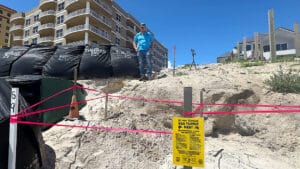
A small dip in the lawn near your seawall may not seem urgent. After heavy rain or unusually high tides, however, that shallow depression can grow into a soft spot, a visible void, or an area where the ground begins to collapse.
Waterfront property owners sometimes call these areas sinkholes, but many are actually caused by soil washout behind the seawall. Lost soil can weaken support around the wall, damage nearby landscaping and hardscaping, and signal that water is moving through places it should not.
How Soil Escapes from Behind a Seawall
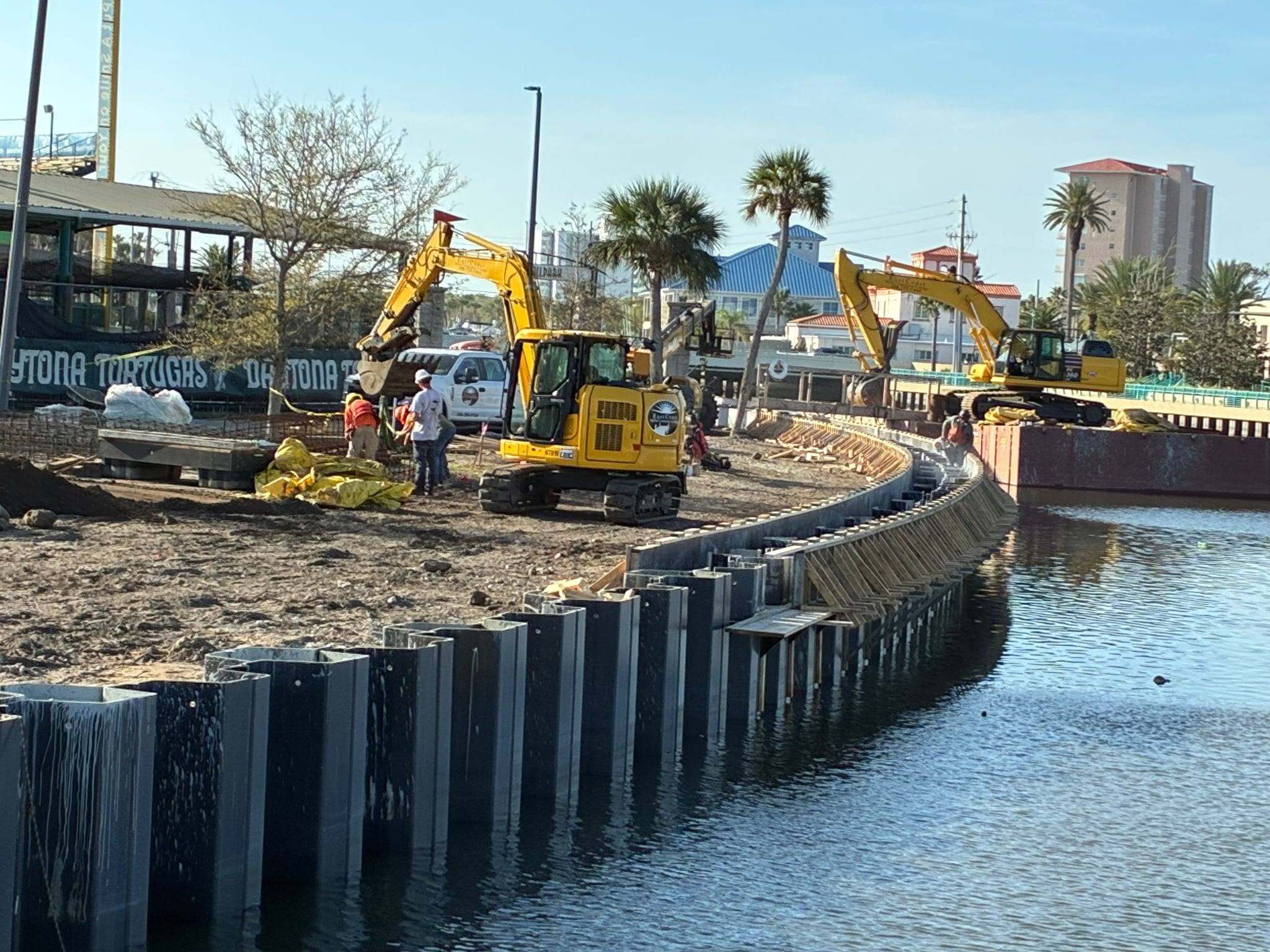
A seawall is designed to hold back soil while protecting the shoreline from tides, waves, currents, and erosion. Over time, joints can separate, cracks can form, and materials can deteriorate. When water moves through these openings, it may carry soil with it.
This process often happens gradually. Each tide cycle or heavy rain removes a little more material until the ground above no longer has enough support. The result may be a depression near the seawall cap, loose soil, or a hollow area beneath the surface.
Drainage problems can make the situation worse. Water collecting behind a seawall creates hydrostatic pressure. Without a properly functioning way to release that pressure, the wall and surrounding soil remain under added stress.
Warning Signs Beyond a Hole in the Yard
Soil washout is often accompanied by other signs of seawall distress. Waterfront property owners should watch for:
- Depressions, soft ground, or recurring low spots near the wall
- Cracks in the seawall cap or nearby concrete
- Soil appearing on the water side of the wall
- Water seeping through joints or cracks
- Leaning, bowing, or bulging wall sections
- Gaps between the lawn and the seawall cap
One warning sign does not always mean the entire seawall needs replacement. It does mean the property should be evaluated before the damage spreads.
Why Adding More Dirt Is Not a Lasting Repair
Filling a depression with soil may improve the yard’s appearance, but it does not correct the path that allowed the original soil to escape. If the opening, drainage failure, or pressure problem remains, the new fill can wash away too.
A lasting solution starts with identifying the source. Depending on the seawall’s condition, repairs may include sealing cracks or joints, stabilizing voids, improving drainage, restoring filtration behind the wall, reinforcing weakened areas, or repairing sections of the seawall itself.
The right approach depends on the wall material, site conditions, water exposure, and extent of the damage. Addressing the cause rather than repeatedly covering the symptom can help protect both the seawall and the property behind it.
Do Not Wait for the Next Major Storm
Florida’s rainy season, high tides, and tropical weather can quickly expose weaknesses along a waterfront. A small area of soil loss can become a larger repair when repeated rainfall and water movement continue working against the structure.
Early evaluation gives property owners more options. It may also help prevent damage to patios, pools, walkways, landscaping, docks, and other improvements near the shoreline.
Protect Your Waterfront Property from Further Washout
If you have noticed soft ground, soil loss, cracks, drainage trouble, or other changes near your seawall, contact East Coast Marine Construction & Design. Their team provides seawall repair and construction, shoreline stabilization and drainage solutions for waterfront properties throughout Central and Northeast Florida.
Give East Coast Marine Construction & Design a call at (386) 777-7440 to schedule a consultation and learn which solution is appropriate for your property.